
Bench Warrants in Hancock County
A warrant check in Hancock County works only when you go to the office that owns the case. There is no single public database for outstanding warrants. Each court keeps its own records, and the sheriff enforces what judges sign. So a thorough warrant lookup means contacting the clerk of the court involved. Ask for the current status, the issuing authority, and what step comes next. Context from other sources can mislead. A docket entry or a custody record may hint that a bench warrant once existed, but neither one shows whether it is still active today. The clerk's answer is the one that counts. That call also tells you whether the matter needs an appearance, a payment, or a motion before the judge will recall the order. Hancock County residents who skip this step often chase stale information.
Hancock County Bench Warrant Docket Context
The assigned MEC source illustrates the court-information route for felony-stage records.
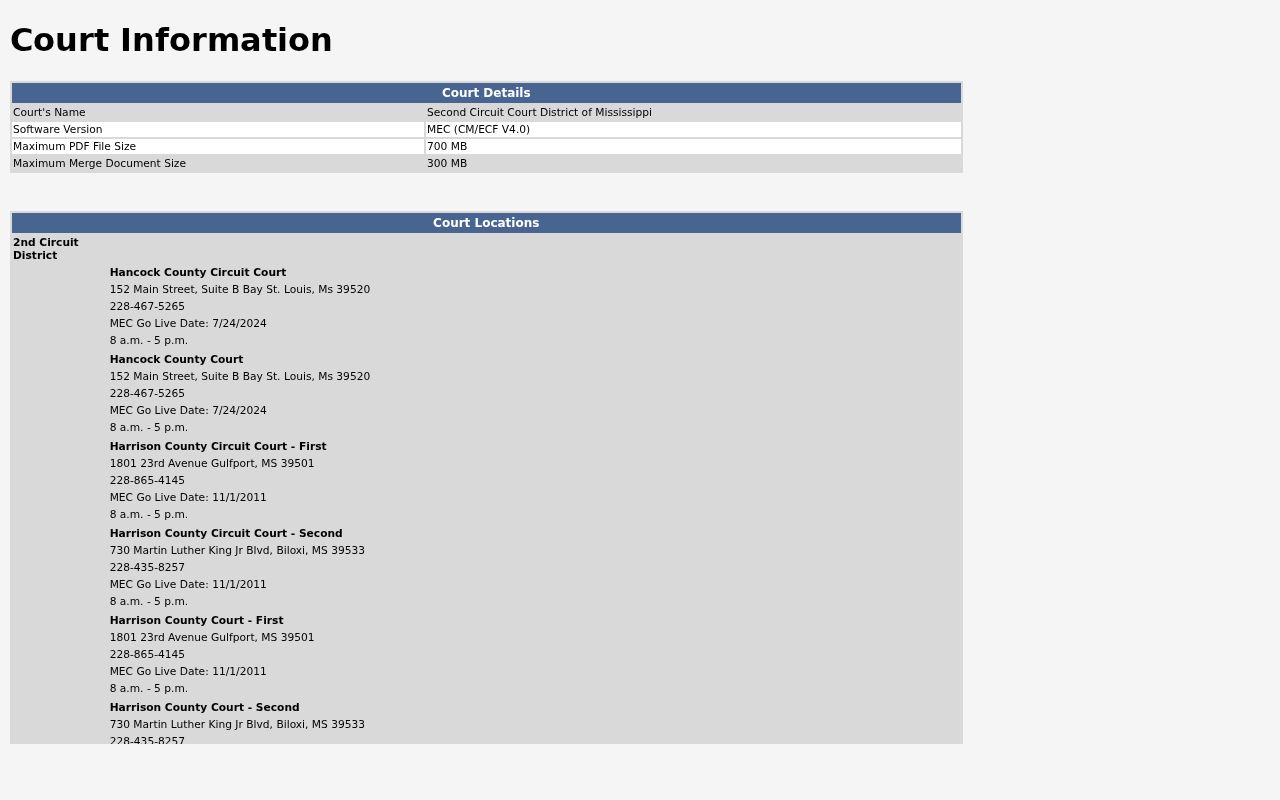
The courthouse record remains controlling when an online entry is incomplete.
How a Hancock County Bench Warrant Is Issued
A judge in Hancock County signs a bench warrant when someone skips a scheduled setting or leaves a court duty unmet. It is an order, not an accusation of a new offense. The clerk of that court controls the file. Start any warrant search there, because no single public database holds every outstanding warrant the county's courts have issued. Ask the clerk whether the order is active, which judge issued it, and what the court wants done. Docket events and custody entries float around online, and they can be useful background. But they cannot confirm that a bench warrant remains in force right now. Only the issuing court can answer that, recall the warrant, or quash it. That is why the clerk's office, not a search box, is the real starting point for resolving the matter in Hancock County.
Bench Warrant vs Arrest Warrant
The two orders do different work. An arrest warrant starts a new criminal case, often after a sworn statement to a judge. A bench warrant, by contrast, is a court's response to someone already in its system who missed a setting or skipped a duty. In Hancock County, both mean a deputy can take you into custody, but a bench warrant points back to the judge who issued it. That judge, through the clerk, is the one who can recall or quash the order.
| Feature | Bench Warrant | Arrest Warrant |
|---|---|---|
| Trigger | [missed court date / FTA / contempt] | A judicial probable-cause finding |
| Who Issues It | Judge assigned to the case | [a judge or magistrate on affidavit] |
| Underlying Case | [an existing case the person skipped] | [a new or charged offense] |
| How It Clears | [appear / recall / quash] | [surrender / bond / court appearance] |
How to Resolve a Bench Warrant
Resolving a bench warrant in Hancock County means dealing with the issuing court directly. Call the clerk, confirm the order is active, and ask what the judge requires. That may be an appearance, a payment, a motion, or all three. Acting early usually beats waiting for a deputy. Only the issuing court can recall or quash the warrant, so no payment or online step closes it on its own.
- [STEP 1 - confirm the warrant and the court that issued it]
- [STEP 2 - consult an attorney about a motion to recall or quash]
- [STEP 3 - appear on the court's bench-warrant or walk-in docket]
- [STEP 4 - resolve the underlying obligation (pay, reschedule, or set the case)]
Caution: Speak with a Mississippi lawyer and the issuing court before arranging an appearance, surrender, bond, or request to recall the process.
Which Hancock County Court Issued It
Figuring out which Hancock County court issued a bench warrant narrows your next move. Hancock Justice Court, the Circuit Clerk, and the three Municipal Courts each hold separate case records. A missed municipal court setting, for instance, lives in that city's court file, not with the county. Enforcement, though, runs through the Sheriff's Office once a judge signs. So a proper warrant lookup starts by matching the case to its court. Give the clerk the case or citation number, the scheduled date, and the full name involved. The clerk can then confirm the status and what the judge wants next. A docket event or custody entry from another source may suggest a warrant once existed, but it cannot tell you whether the order still stands. Only the issuing court in Hancock County can do that.